

All articles · · By byJOOM
How to present your design to a jury
Presenting your design to a jury, or a review panel, is one of the most important skills in architecture. A good presentation can make an average project shine, and a poor one can hide a good design. This guide offers general advice for students, from our perspective at byJOOM. It is our opinion, written in October 2026. Your school's rules and your tutors' advice come first.
Know your audience and time
Find out who will be in the jury, how long you have, what you may bring, and what the school expects. Plan for the time you have, with a margin. A short, clear presentation beats a long, rambling one.
Tell one clear story
Decide what your project is about in one or two sentences. Everything you say and show should support this. A simple structure works well:
- The question. What is the project responding to: the site, the people, the brief?
- The idea. What is your answer, in simple terms?
- How it works. Show the plan, section, models and key spaces that explain the idea.
- The experience. What is it like to be there? A view, a journey, a moment.
- The conclusion. What have you learned, and why does the project matter?
Find out who will be in the jury, how long you have, what you may bring, and what the school expects.
Make your boards or slides work
- Clarity over quantity. Fewer, stronger images. Do not cram.
- A clear hierarchy. The main idea should be visible from a distance.
- Readable drawings, with scale, north and labels where needed.
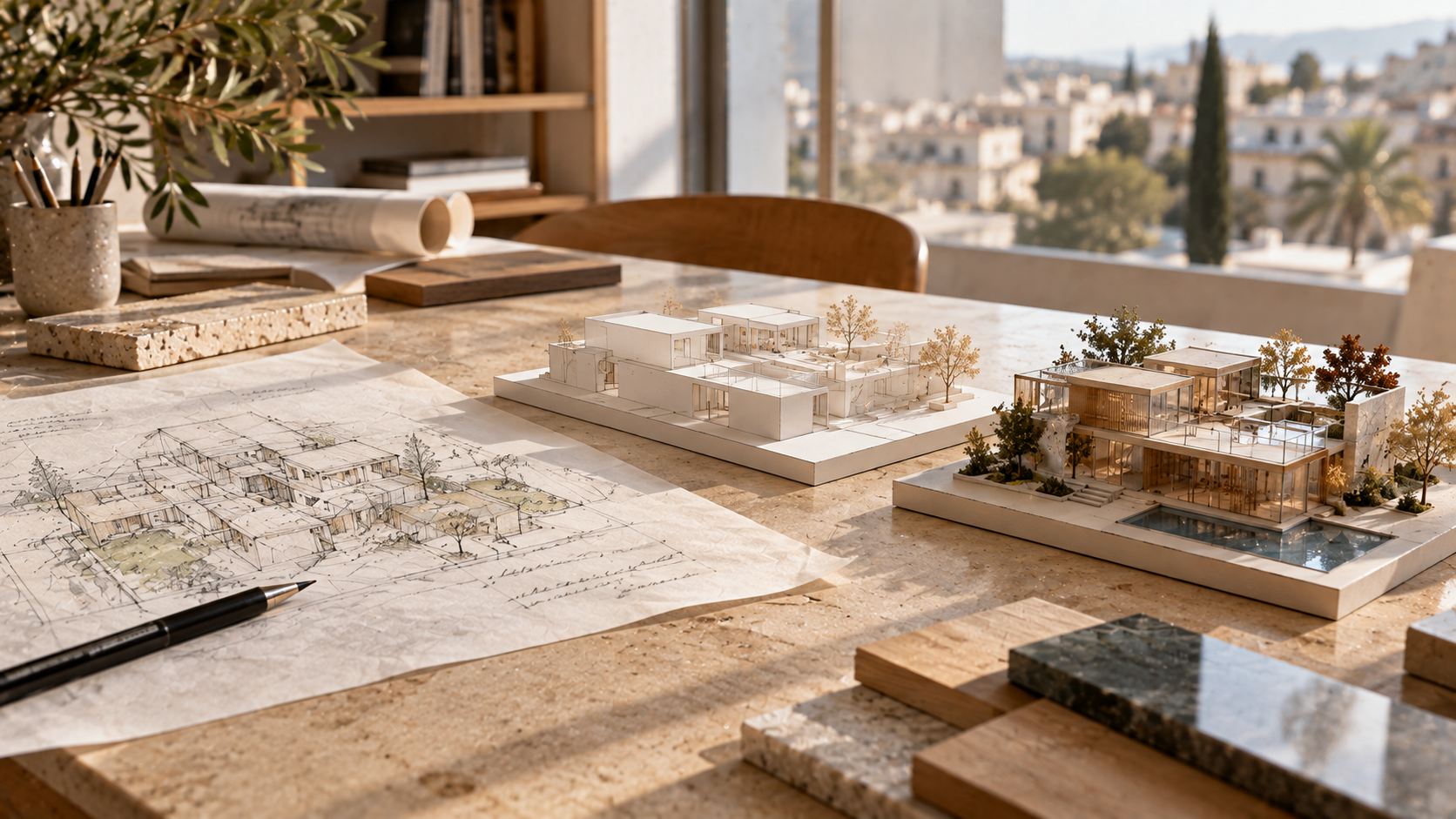
- A good model or physical piece, if you can bring one. It can say more than words.
- Large, clean text, and not paragraphs. The jury should look at the work, not read.
- Test everything beforehand: slides, files, projector, fonts.
Practise out loud
Rehearse with a friend or a mirror, and time yourself. Know your opening and your ending by heart, and keep the middle flexible. Be ready to be interrupted.
Speak well
- Speak to the people, not to the wall or your notes.
- Be calm and clear. A steady pace and pauses help.
- Point to the work, and describe what is shown.
- Be honest about what worked and did not work.
- Be confident, not defensive.
Handle questions and criticism
The jury will ask questions and give criticism. This is a conversation, not an attack.
- Listen carefully to the whole question.
- Pause before you answer.
- Answer directly, and say "I don't know" if you do not.
- Do not argue. Thank them, and take notes. Think about what you can use.
- Defend your ideas with reasons, not feelings.
Dress, bring, arrive
Dress comfortably and appropriately. Bring spare copies, cables, adaptors and anything needed. Arrive early to set up.
Afterwards
Write down the comments while you remember them. Thank your jury. Reflect on what to do differently, and how to use the feedback to improve your next project.
In short
Tell one clear story, make the work easy to read, practise, speak calmly, and treat questions as a conversation.
Cite this article
Author: byJOOM. Choose a style and copy the citation.
- APA
byJOOM. (2026, October 15). How to present your design to a jury. byJOOM. https://byjoom.com/journal/how-to-present-your-design-to-a-jury/
- Harvard
byJOOM (2026) How to present your design to a jury. Available at: https://byjoom.com/journal/how-to-present-your-design-to-a-jury/ (Accessed: [date]).
- MLA
byJOOM. “How to present your design to a jury.” byJOOM, 15 Oct. 2026, byjoom.com/journal/how-to-present-your-design-to-a-jury/. Accessed [date].
- Chicago
byJOOM. “How to present your design to a jury.” byJOOM, October 15, 2026. https://byjoom.com/journal/how-to-present-your-design-to-a-jury/.