

Project story · Siwa, Egypt
Pavilions that borrow the shape of the dunes
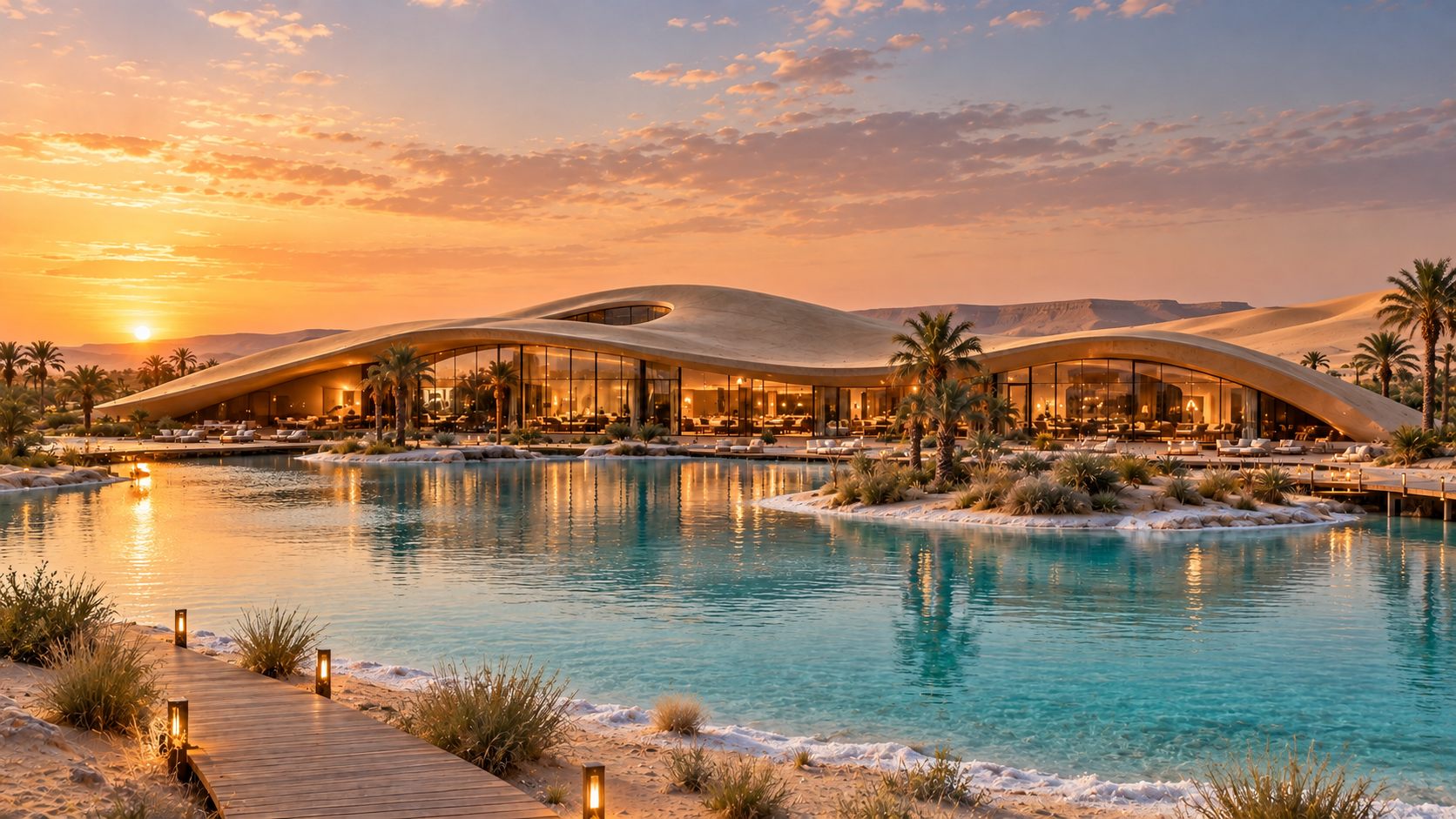
In Siwa, a cluster of low, shell-like pavilions rests around still water. The buildings take their form from the sand around them, and so look as if they have always been there.
By byJOOM · Dune · Hospitality and resorts
Soft, low and the colour of the sand
The buildings take the shape of the dunes around them: soft, low, warm in tone and shaded by deep curving roofs. From a distance they are a change in the horizon rather than a row of buildings. At sunset they glow from within, and the curving roofs hold the last light.
A lagoon at the centre
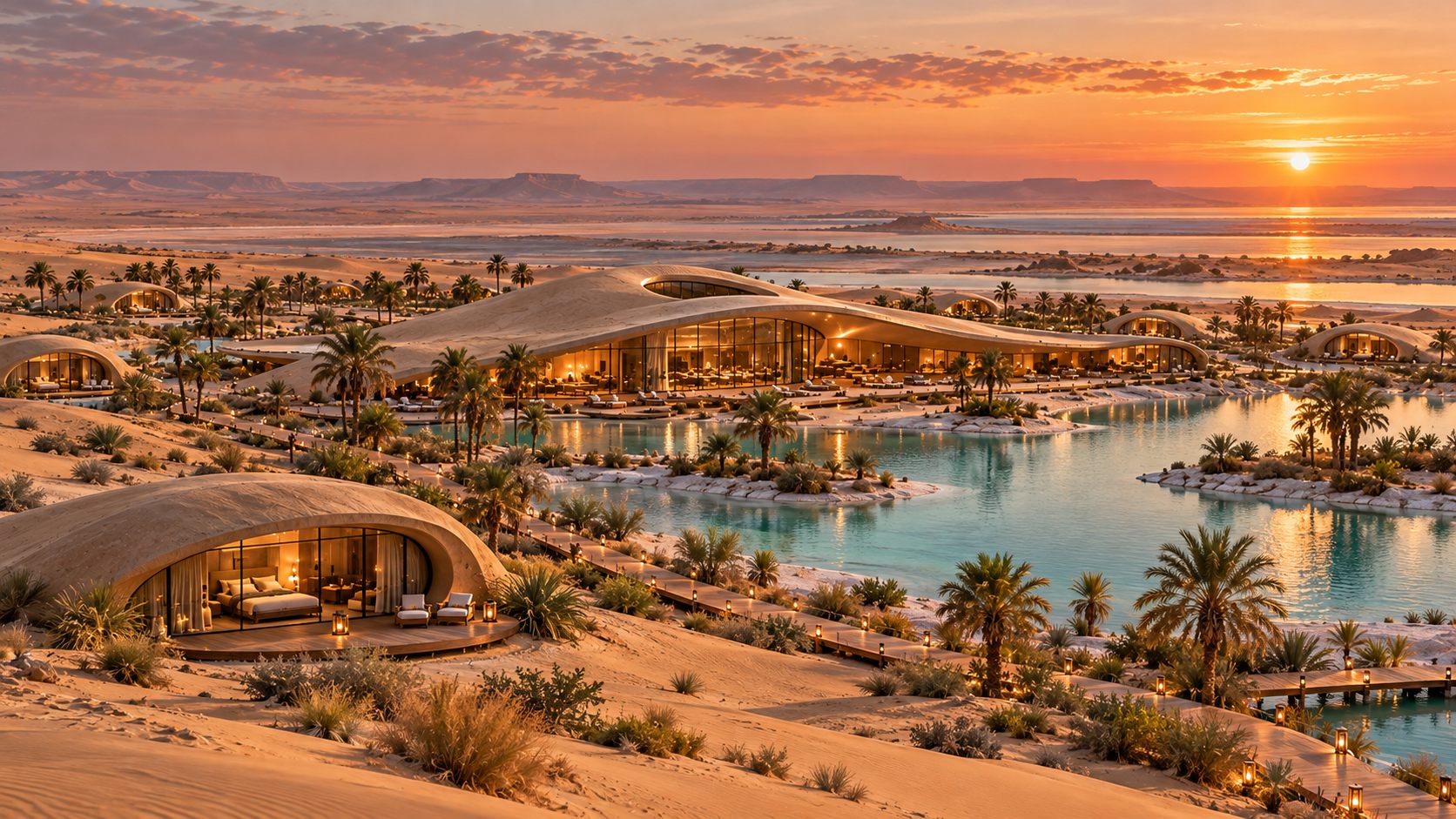
Every pavilion opens to a shared lagoon, so privacy and company sit side by side. Water does more than please the eye: it cools the air and links the pavilions, so that the whole retreat is organised around something that is both beautiful and useful in a desert. Palms and low planting soften the edge between sand and water.
Inside a shell
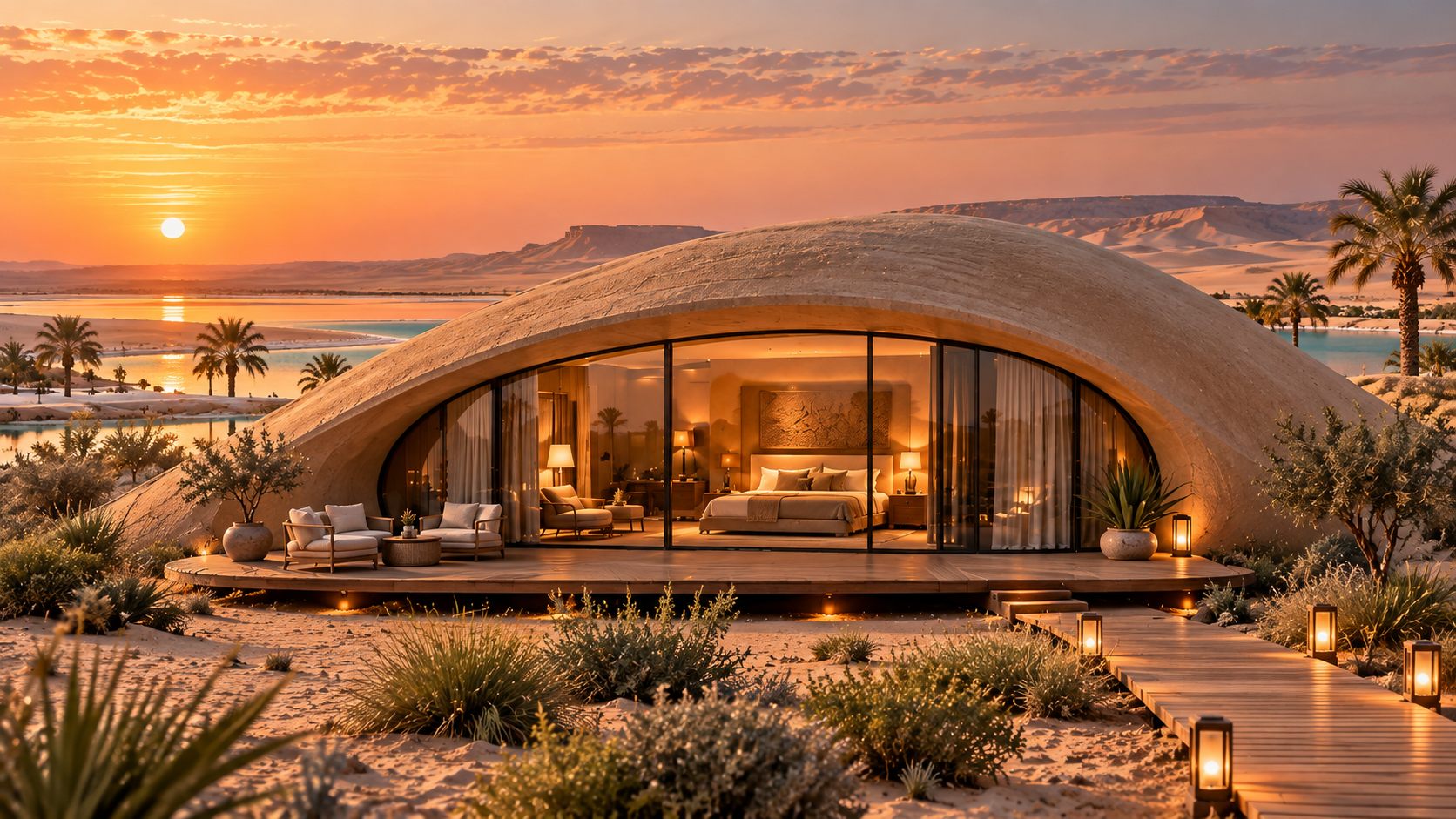
In the close view a single pavilion is a shell of sand-coloured roof with a long glazed front. Within, a bed and a few chairs are lit warmly, and a lantern stands on the boardwalk outside. The room is enclosed enough to feel private and open enough to feel like part of the landscape.
Arriving on foot, slowly
Paths are lit gently, so evening arrival is on foot, slowly. Guests walk along lantern-lit boardwalks beside still water, and slowing down becomes part of the arrival. A retreat that asks you to hurry has already failed, and Dune's circulation is designed to take the hurry out of the first hour.
Because they borrow their form from the dunes, they look as if they have always been part of Siwa.
A retreat for quiet
Dune is a desert retreat for guests who come for quiet: sleeping, bathing, eating and watching the light change. The pavilions are shaped for those four activities and for little else. The same thinking about sun, heat and cool nights that guides the studio's work in the desert is visible in the shaded roofs and the sheltered water.
Part of Siwa, not placed on it
Because the pavilions borrow their form from the dunes, they look as if they have always been part of Siwa. That is the most any design can hope for in a landscape as strong as this one: to be accepted by it.
This article describes design intention. The images are design visualisations, not photographs of a finished building. See the Disclaimers.