

Project story · Alexandria, Egypt
A garden for everyone who crosses the city
At the historic centre of Alexandria, Mansheya Gardens reinterprets an old geometry in stone, warm timber and water, and puts public life first.
By byJOOM · Mansheya Gardens · Urban design and masterplanning
A garden at the heart of a city
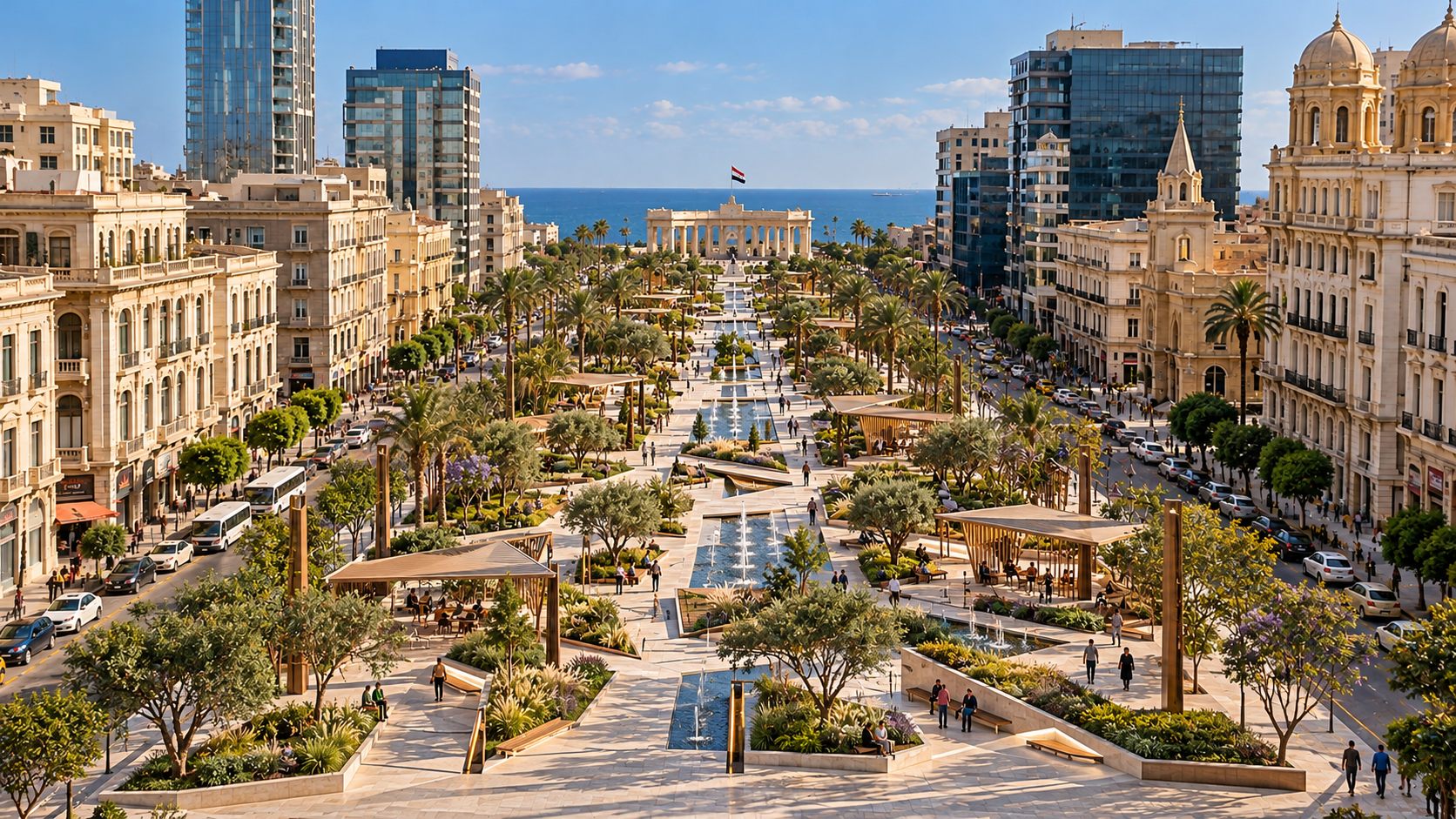
Mansheya Gardens is a contemporary public garden at the historic centre of Alexandria. It is for everyone who crosses the city centre, and the design starts by asking what a historic public garden should be today. The answer has to work at every hour of the day, for people who are rushing and people who are resting.
An old geometry, a new language
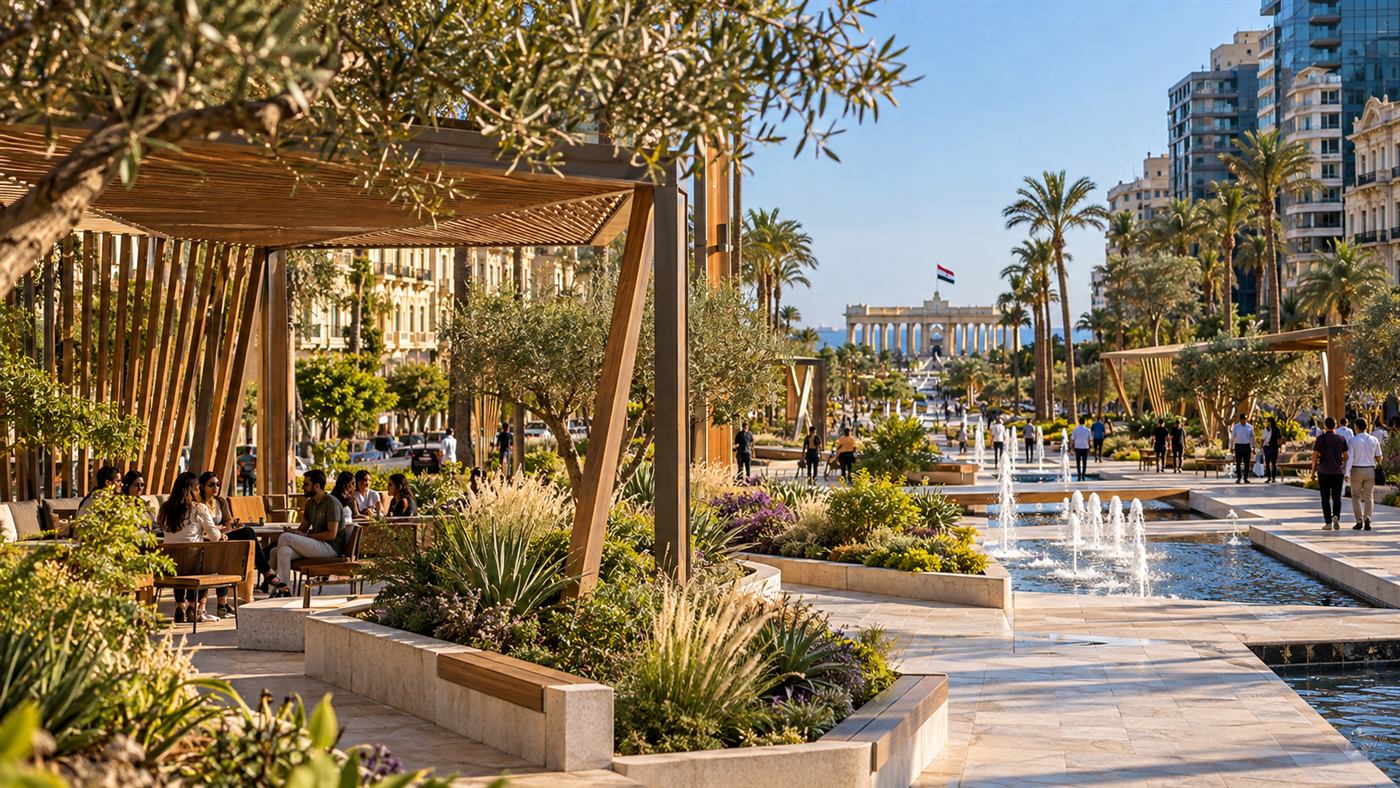
The historic geometric order of the garden is reinterpreted in a calm, contemporary language of stone, warm timber and fine metal. Mediterranean planting and olive trees fill the beds. The pictures show long axes of fountains and paths, with rows of palms either side, leading toward the sea, so that the old order remains legible in a new material.
Pavilions to meet and rest in
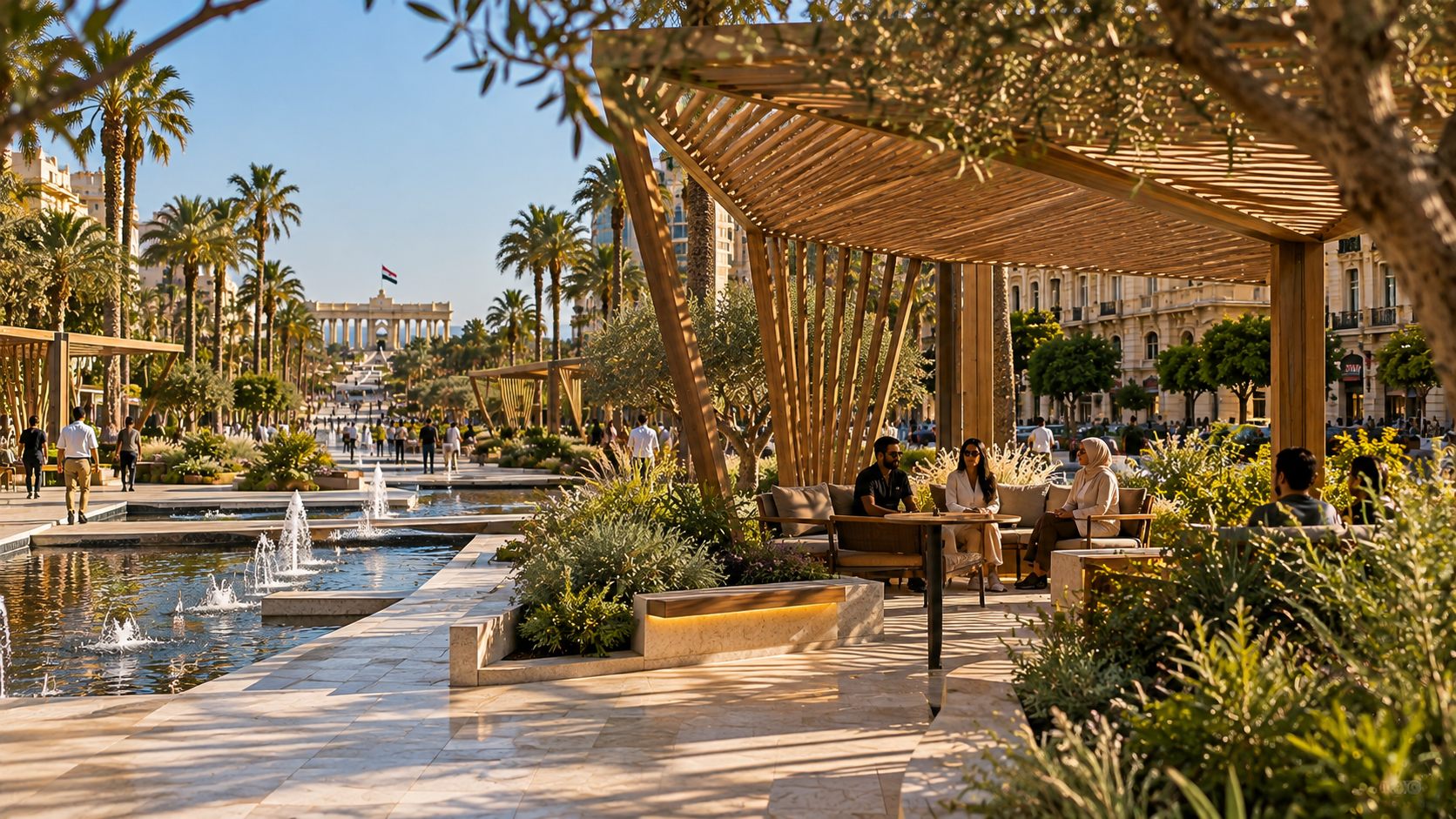
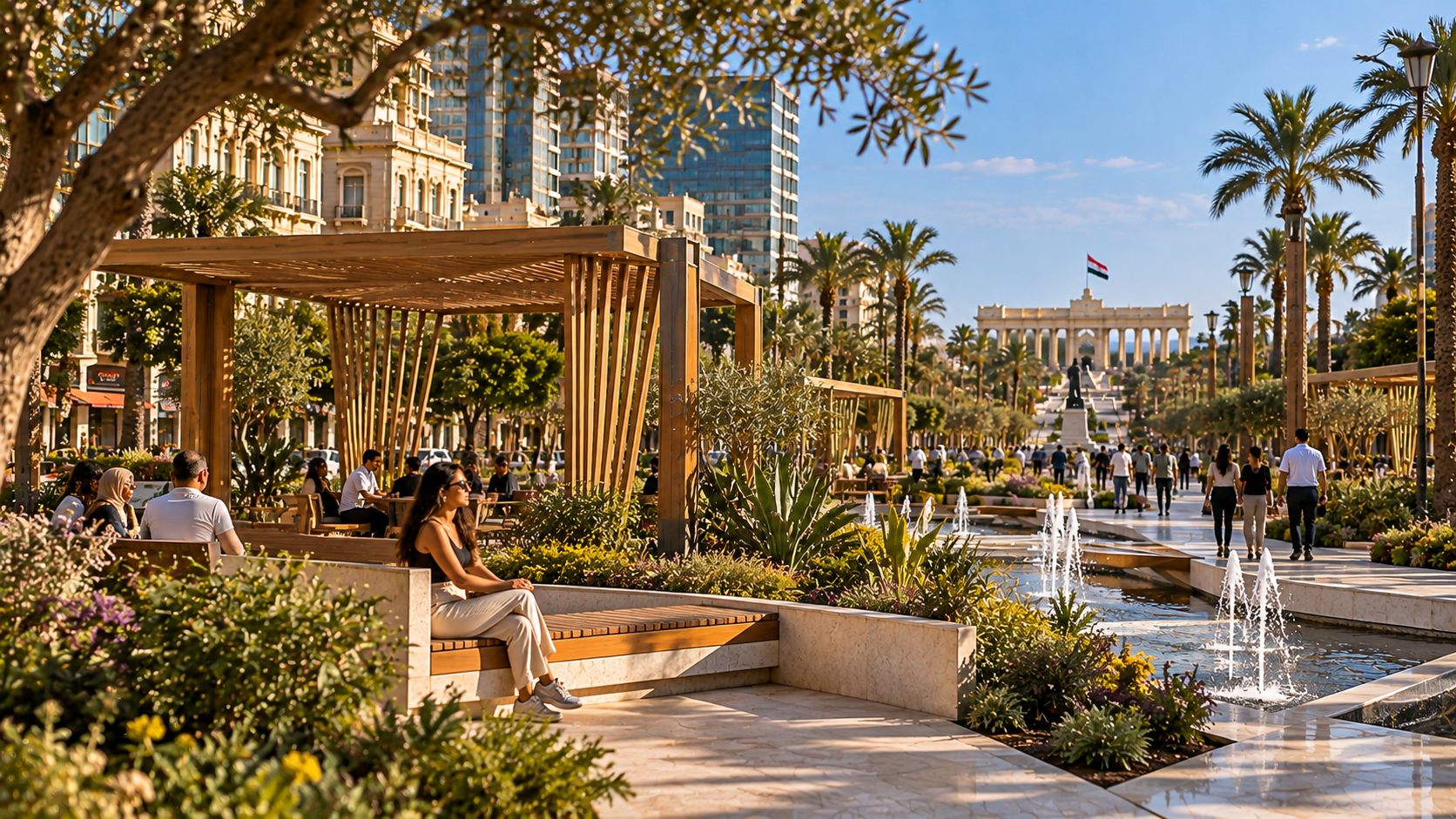
Shaded pavilions give people places to meet and rest. Their timber frames are open and slatted, and under them are limestone seats and planters where people sit in the shade. In the close views, people are already in them: sitting, talking, looking along the water.
Water to cool the air
Water runs through the garden in long, shallow channels and fountains that cool the air. They are not only decoration: in the heat of an Alexandrian afternoon, they make the garden a place people will actually choose to stay in. The fountains also give the garden a sound.
Natural materials that age well on the coast, mature trees and a plan that puts public life first.
Clear routes at every hour
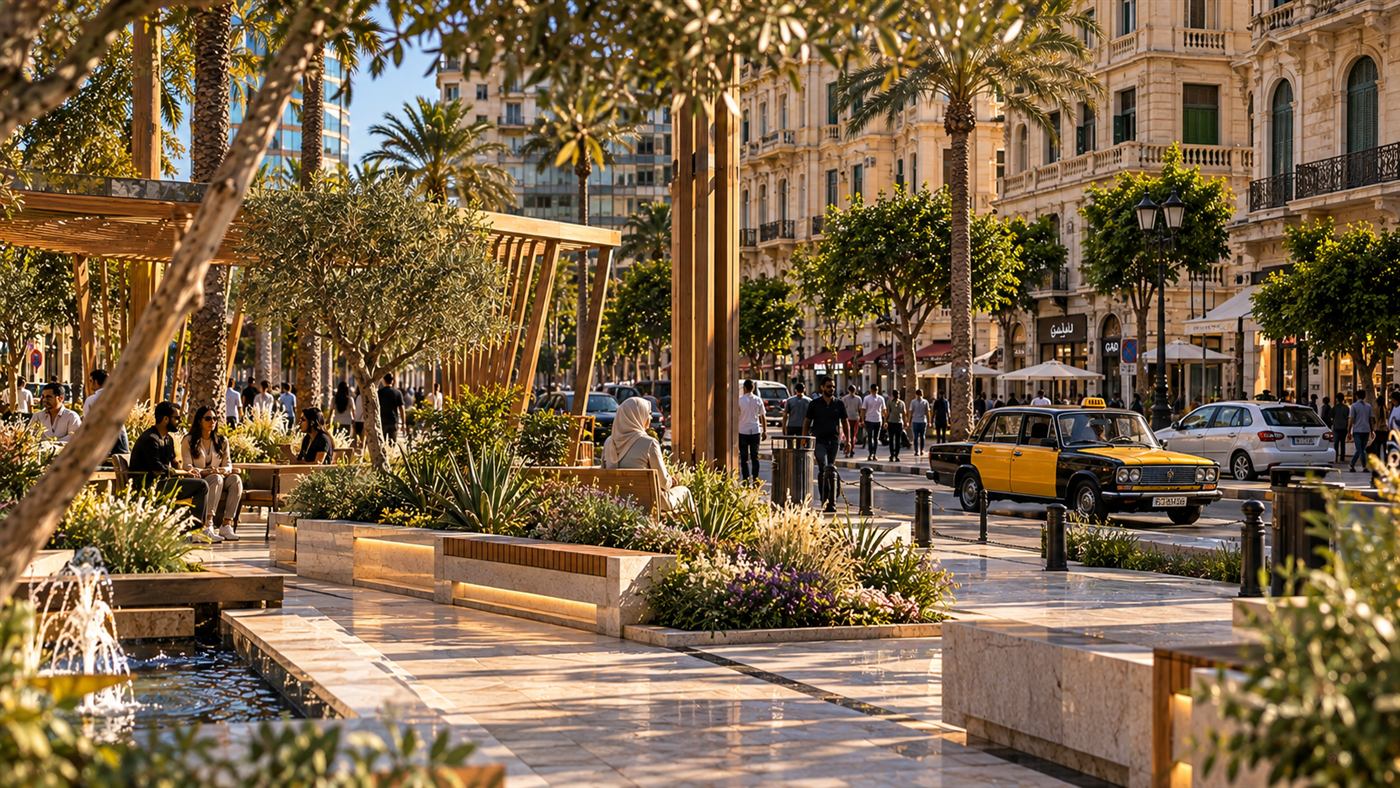
The garden has clear routes through it at every hour of the day. The surrounding buildings, roads and levels are kept, and the garden frames the views to the historic facades. A person crossing the centre can cut through the garden and arrive somewhere better than the pavement.
Natural materials, mature trees
Natural materials that age well on the coast, mature trees and a plan that puts public life first. A garden does not become finished when it is built; it is finished when the trees are tall, and the design is arranged so that it will be better in every decade.
This article describes design intention. The images are design visualisations, not photographs of a finished building. See the Disclaimers.