

All articles · · By byJOOM
Biodiversity Net Gain: what it is and how to plan for it
Biodiversity Net Gain, or BNG, is a requirement in England that new development must leave nature in a measurably better state than before. It has changed how many projects are planned, and it affects designers, landowners and builders. At byJOOM we welcome it, as we like buildings that are good for wildlife. See also Biodiversity on a roof. This article is a general outline as we understand it in October 2026. The law, the metric, exemptions and guidance are detailed, are updated, and differ in Scotland, Wales and Northern Ireland. It is not legal or ecological advice. Check current requirements and take advice from a qualified ecologist and your local planning authority.
What it is
BNG was introduced by the Environment Act 2021. In broad terms, for most development in England that needs planning permission, the biodiversity value of the site after development must exceed its value before, by at least a set minimum, measured using a statutory biodiversity metric. The commonly stated minimum is 10%. The gain must be secured for a long period, commonly 30 years.
How it is measured
A qualified ecologist surveys the site and uses the statutory biodiversity metric to calculate biodiversity "units" from the types of habitat, their size, their condition, and their strategic significance, before and after the proposed development. The metric is a calculation tool. It does not capture everything about nature, but it provides a common method.
The gain must be secured for a long period, commonly 30 years.
Ways to achieve it
The mitigation hierarchy applies: first avoid harm, then minimise it, then compensate.
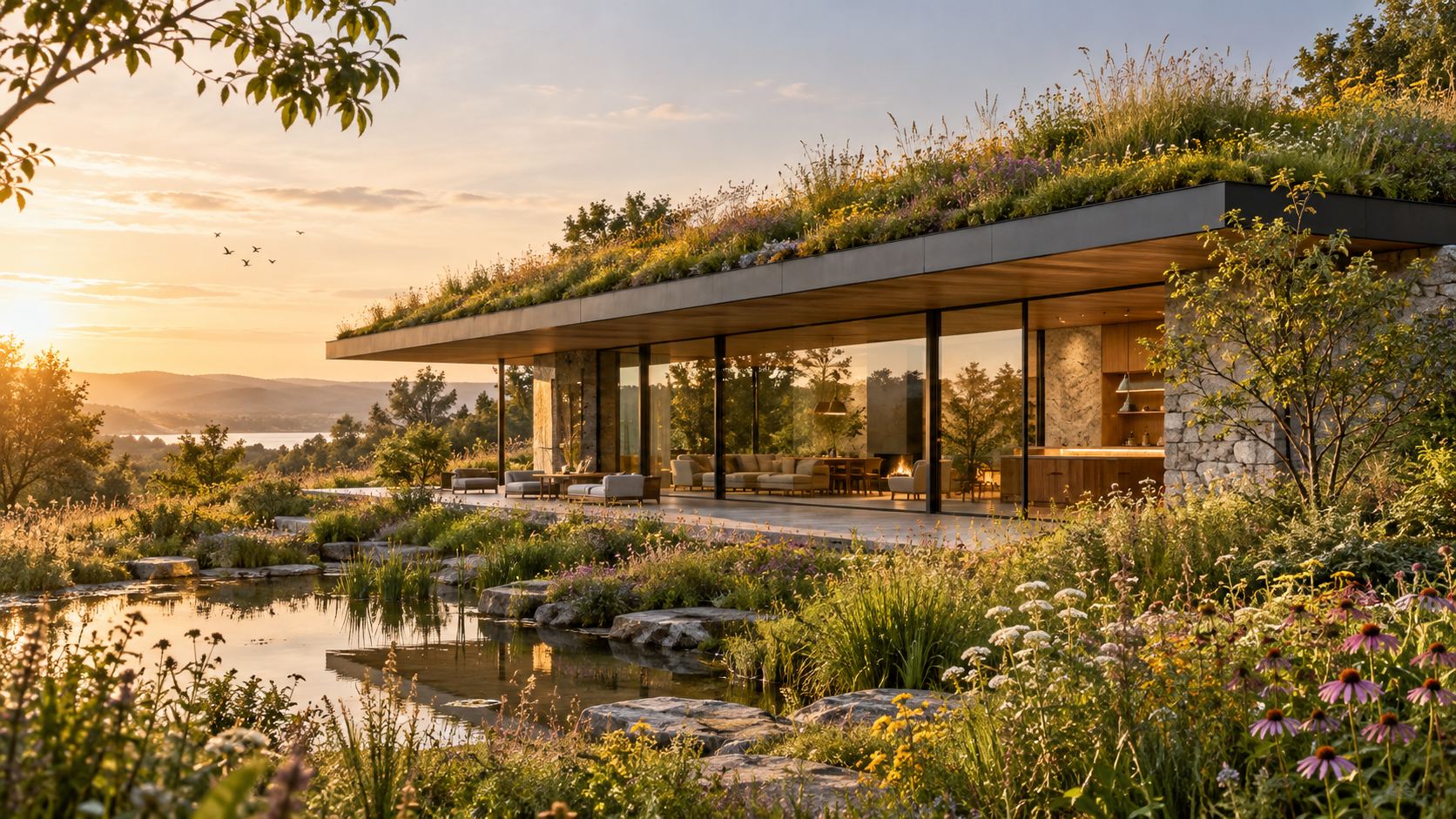
- On-site. Retain and enhance existing habitats, and create new ones, such as planting, wildflower areas, ponds, hedgerows, green roofs and walls, and wildlife features.
- Off-site. Where gains cannot be achieved on the site, delivering them on other land, either your own or by buying them from a landowner or provider.
- Statutory credits. As a last resort, the government has made provision for purchasing credits.
The aim is to keep gains as local as possible and to deliver them in practice.
Planning and design
- Start early. Survey and assess habitats before the layout is fixed. A good design retains valuable habitats and makes space for new ones.
- Think about the whole site, including gardens, streets, roofs, drainage and landscaping.
- Choose habitats that can be maintained. The commitment is long, so plan who will look after them.
- Combine with other aims, such as drainage, shade, amenity and carbon.
- Record and monitor. A management and monitoring plan is typically required.
Exemptions and special cases
Some development is exempt or treated differently, for example certain small sites, householder applications and other categories set by regulations. Rules are detailed and may change, so check with an ecologist and the planning authority.
Other nature laws still apply
BNG does not replace protection for protected species, such as bats, nesting birds and badgers, or for protected sites. Surveys may be needed at certain times of year, so build time into the programme.
Costs and benefits
BNG can add cost and time, but if planned early it can make places that are better for people and nature. See Biodiversity and landscape.
In short
Survey early, avoid harm, design for habitats, secure and manage gains, and take advice from an ecologist and the planning authority.
Cite this article
Author: byJOOM. Choose a style and copy the citation.
- APA
byJOOM. (2026, October 15). Biodiversity Net Gain: what it is and how to plan for it. byJOOM. https://byjoom.com/journal/biodiversity-net-gain-what-it-is/
- Harvard
byJOOM (2026) Biodiversity Net Gain: what it is and how to plan for it. Available at: https://byjoom.com/journal/biodiversity-net-gain-what-it-is/ (Accessed: [date]).
- MLA
byJOOM. “Biodiversity Net Gain: what it is and how to plan for it.” byJOOM, 15 Oct. 2026, byjoom.com/journal/biodiversity-net-gain-what-it-is/. Accessed [date].
- Chicago
byJOOM. “Biodiversity Net Gain: what it is and how to plan for it.” byJOOM, October 15, 2026. https://byjoom.com/journal/biodiversity-net-gain-what-it-is/.