

All articles · · By byJOOM
Biodiversity on a roof
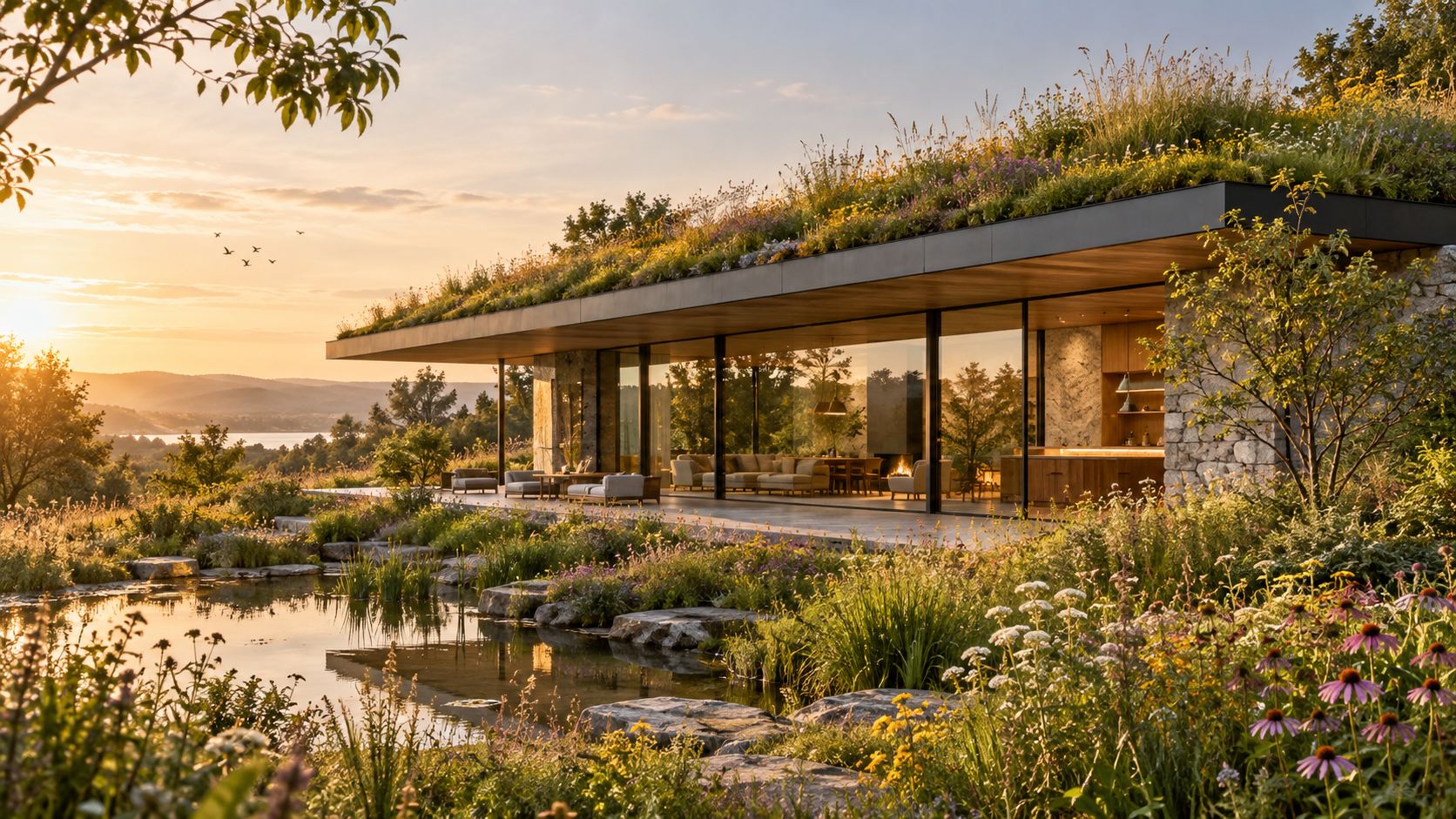
A roof used to be an afterthought: a cover for the building and a place for machinery. Now it can be a garden, a habitat and a cooling layer. Many of our concepts have planted roofs, terraces and walls. This article explains why, and what makes them work. See also Biodiversity and landscape.
Why plant a roof
- Habitat. In a dense city, a roof is one of the few places left for plants, insects and birds. Even a small planted area helps.
- Cooling. Planting shades the roof and cools the air as plants release moisture, which reduces heat in and around the building.
- Rainwater. A planted roof holds and slows rain, which reduces the load on drains.
- People. A roof garden is a place to sit, eat and look at the sky. See also Offices for how people work now.
- Appearance. From neighbouring buildings, a green roof looks better than a field of machinery.
It is not just a lawn
A roof for biodiversity is designed differently from one for show.
- Varied planting. Native and climate-suited plants, in a mix of heights and flowering times, support more life.
- Varied depth. Shallow and deeper areas of soil, with mounds, stones and dead wood, make different habitats.
- Water. A small pond or a damp area helps insects and birds.
- Quiet corners. Areas left undisturbed matter. At Hotel H, our planted roof is conceived as a green crown above the parapets, in a dense part of the city.
A roof for biodiversity is designed differently from one for show.
Choose plants for the place
In a hot, dry climate we choose drought-tolerant plants and collect and reuse water. In a cool, wet one we choose plants that thrive in rain and cold. A plant that suits its climate needs little help and survives. See also Rain, brick and timber and Designing for the desert.
What lies underneath
A planted roof is a system: the roof structure, waterproofing, a root barrier, drainage, growing medium and plants. The structure must carry the extra weight, including wet soil. The waterproofing must be protected. Access for maintenance, safe edges and fire safety must be planned. These are matters for specialists, from the start.
Care
Planted roofs are living things, and they need care. Watering in the first seasons, weeding, checking drains and monitoring all matter. A plan for who will look after it, and how, is part of the design.
Beyond the roof
Terraces, balconies, walls and courtyards can also be planted. At The Beacon, planted terraces step down to the street. At Kobri El-Gamaa Residences, deep balconies carry planting for every apartment. Together they make a building part of the landscape. See also Towers that give something back.
Honesty
Planting does not solve everything. A roof garden cannot replace a woodland, and it cannot make up for a wasteful building. We use it as part of a wider approach, along with reuse, low-carbon materials and efficient design.
Our projects are concept designs, and the images are visualisations (see our Disclaimers).
Cite this article
Author: byJOOM. Choose a style and copy the citation.
- APA
byJOOM. (2026, October 15). Biodiversity on a roof. byJOOM. https://byjoom.com/journal/biodiversity-on-a-roof/
- Harvard
byJOOM (2026) Biodiversity on a roof. Available at: https://byjoom.com/journal/biodiversity-on-a-roof/ (Accessed: [date]).
- MLA
byJOOM. “Biodiversity on a roof.” byJOOM, 15 Oct. 2026, byjoom.com/journal/biodiversity-on-a-roof/. Accessed [date].
- Chicago
byJOOM. “Biodiversity on a roof.” byJOOM, October 15, 2026. https://byjoom.com/journal/biodiversity-on-a-roof/.