

All articles · · By byJOOM
Solar panels on buildings: planning, design and integration
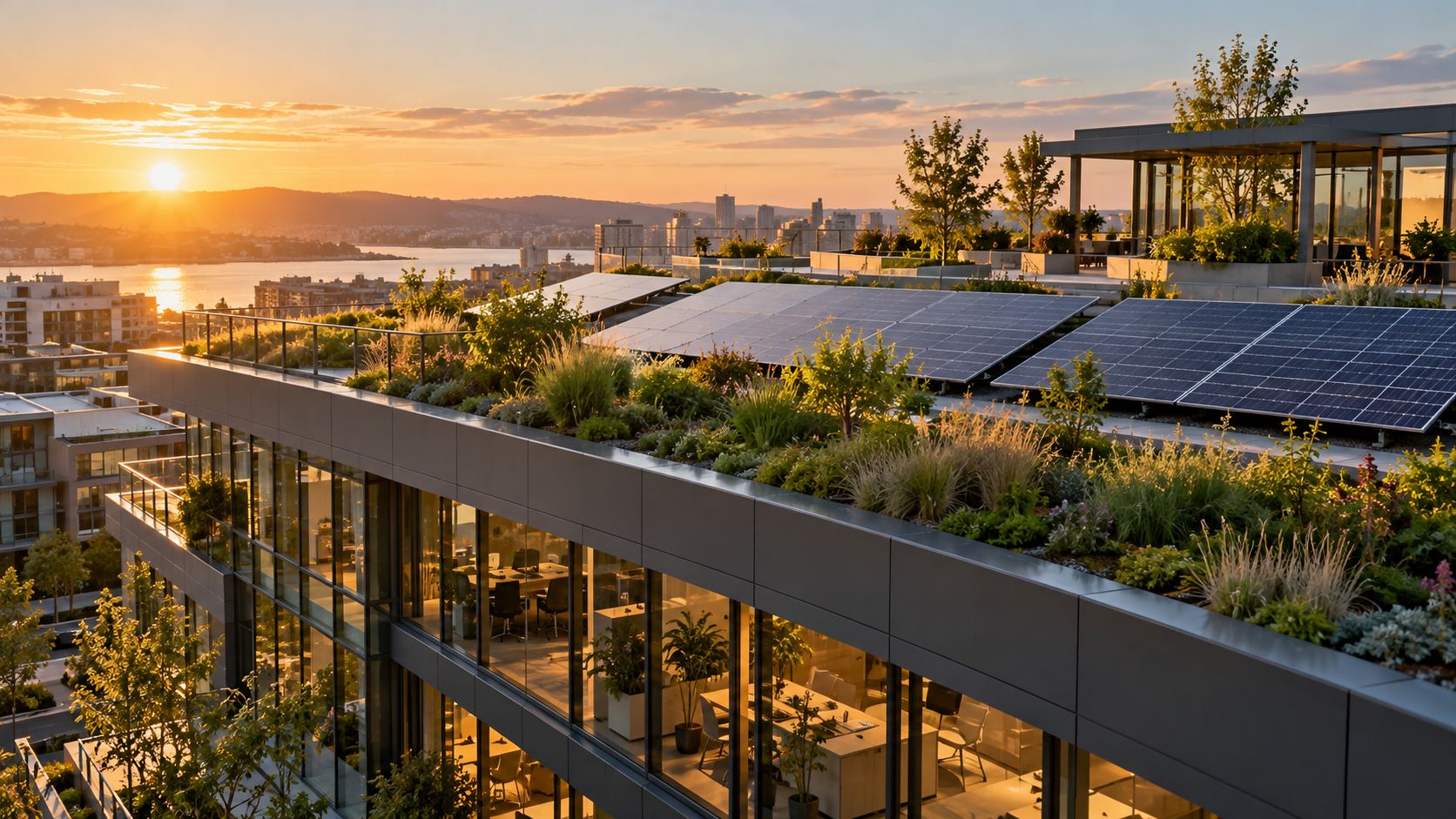
Solar panels are one of the easiest ways for a building to generate its own energy. They are common on roofs, and increasingly on façades and canopies. At byJOOM we plan for them early, because they are much easier to fit in a design than to bolt on afterwards. This guide explains the main types, what to consider, and common pitfalls. It is general information, written in October 2026. Performance, costs, incentives and rules vary by country and change quickly, so take advice from a qualified designer or installer, and check current requirements.
Two main kinds
- Photovoltaic (PV) panels turn sunlight into electricity.
- Solar thermal collectors use sunlight to heat water.
Most new projects use PV, sometimes with a battery to store energy for the evening.
What decides how well they work
- Orientation and tilt. In the northern hemisphere, a roof facing south generally gets the most sun, and east- and west-facing roofs can still work well. The best tilt depends on latitude.
- Shade. Trees, neighbouring buildings, chimneys and parapets can reduce output a great deal, even when only a small part of the array is shaded.
- Heat. Panels lose a little efficiency as they get hot, so ventilation behind them helps.
- Dirt and dust. In dusty places, cleaning matters.
- Area. The roof size sets how much can be installed.
Most new projects use PV, sometimes with a battery to store energy for the evening.
Planning ahead in the design
- Structure. The roof must carry the weight of the panels, the fixings and wind loads. A structural engineer should check it.
- Roof layout. Keep space for panels and for safe access, away from rooflights, vents and edges.
- Waterproofing. Fixings must not cause leaks. See Flat roofs and Pitched roofs.
- Electrical routes. Plan a route for cables, the inverter and the connection to the building's supply.
- Fire safety. Panels and cables on roofs raise questions for firefighters and for fire design. Check local rules and guidance.
- Access and maintenance. Provide safe access for cleaning and repairs.
Integration and appearance
Panels can sit on top of the roof, be built into it, or form part of a façade or a shading structure. Good design considers how they look from the street and from above. In conservation areas and on listed buildings, there are additional rules.
Costs, savings and rules
The cost and payback depend on the price of equipment, the price of electricity, the amount used on site, and any incentives or rules for selling surplus to the grid. These change often and differ by country. Treat any quoted figures with caution, and ask for independent calculations.
Batteries and demand
A battery lets a building use more of its own solar energy, but it adds cost and has its own safety and carbon considerations. Controls, efficient appliances and shifting use to sunny hours also help.
Carbon and end of life
Panels take energy to make and save energy over their lives. Ask about the manufacturer, the warranty, and recycling at the end of life. See Embodied carbon in plain language.
In short
Plan solar early: orientation, structure, access and cables. Avoid shade, get independent advice on costs and rules, and treat panels as part of the architecture.
Cite this article
Author: byJOOM. Choose a style and copy the citation.
- APA
byJOOM. (2026, October 15). Solar panels on buildings: planning, design and integration. byJOOM. https://byjoom.com/journal/solar-panels-on-buildings/
- Harvard
byJOOM (2026) Solar panels on buildings: planning, design and integration. Available at: https://byjoom.com/journal/solar-panels-on-buildings/ (Accessed: [date]).
- MLA
byJOOM. “Solar panels on buildings: planning, design and integration.” byJOOM, 15 Oct. 2026, byjoom.com/journal/solar-panels-on-buildings/. Accessed [date].
- Chicago
byJOOM. “Solar panels on buildings: planning, design and integration.” byJOOM, October 15, 2026. https://byjoom.com/journal/solar-panels-on-buildings/.