

All articles · · By byJOOM
CLT and mass timber: what architects need to know
Cross-laminated timber (CLT) and other mass timber products make it possible to build large structures from wood: floors, walls, roofs and even tall buildings. At byJOOM we follow this field with interest, because timber can reduce the carbon of a building. This guide explains what mass timber is, what it offers and what to be careful about. It is general information, written in October 2026. Rules and products vary by country and change, so always take advice from an engineer and check current requirements.
What mass timber is
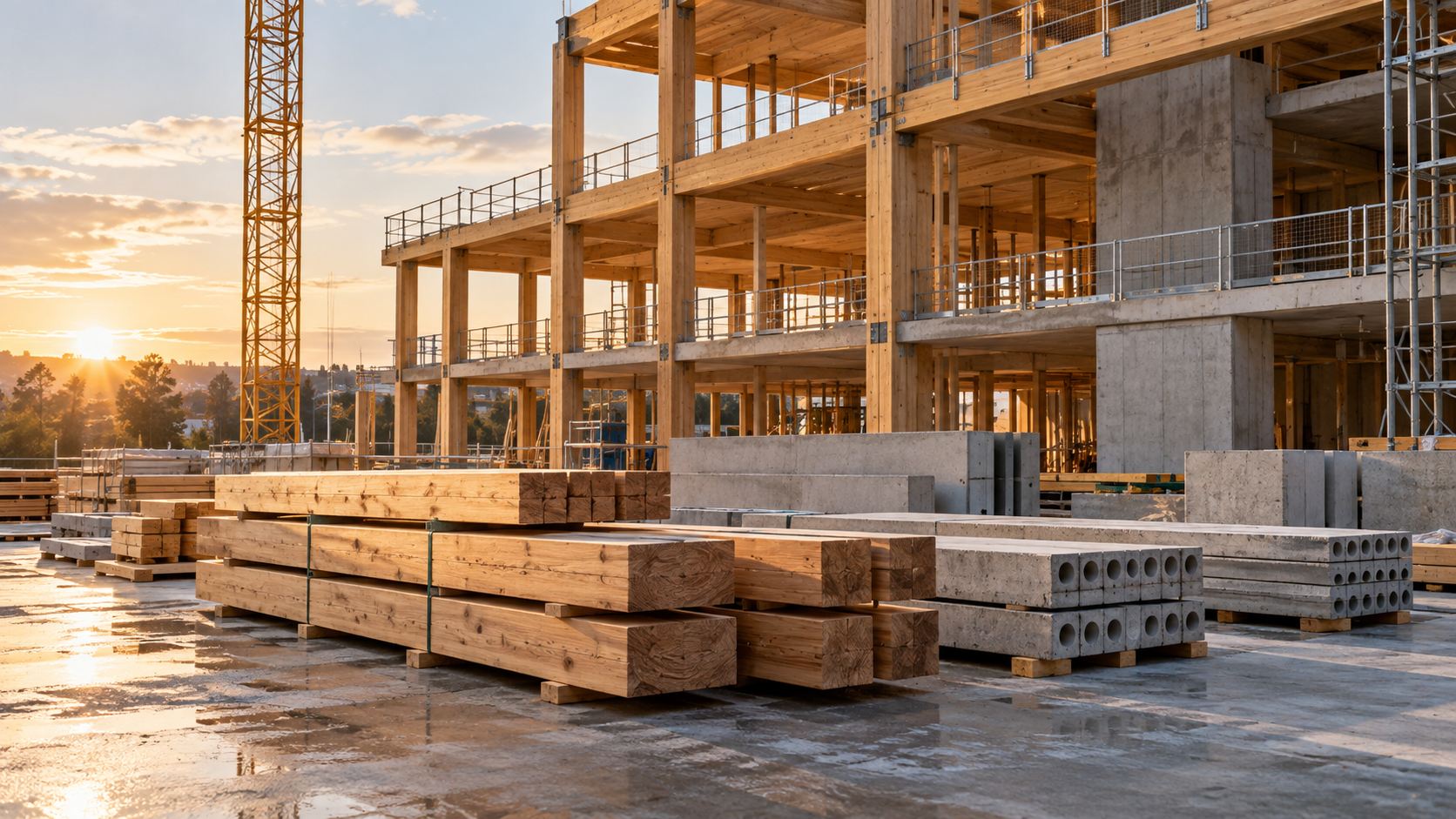
Mass timber is a family of engineered products made from many pieces of wood glued, nailed or doweled together into large, strong elements.
- CLT (cross-laminated timber) is made of layers of boards, each layer at right angles to the one below, glued into solid panels. It can be used for floors, walls and roofs.
- Glulam (glued laminated timber) is made of layers of timber glued together to form long beams and columns, including curved shapes.
- LVL (laminated veneer lumber) is made of thin veneers glued together into strong beams and panels.
- Dowel-laminated and nail-laminated timber are built up without glue.
What it offers
- Lower carbon, potentially. Timber from responsibly managed forests stores carbon, and timber structures can have a lower embodied carbon than concrete or steel alternatives. The result depends on the whole building and its life, so it should be compared carefully. See Embodied carbon in plain language.
- Speed. Elements are made accurately off site and assembled quickly, which can shorten construction time and reduce noise and traffic on site.
- Light weight. Timber is lighter than concrete, which can reduce foundations.
- Warmth. Exposed timber gives interiors a warm, natural character, as in our concept for Masjid Al Noor's timber details and many of our schools and houses.
Mass timber is a family of engineered products made from many pieces of wood glued, nailed or doweled together into large, strong elements.
What to be careful about
- Fire. Mass timber chars at a predictable rate, and structures can be designed to keep their strength during a fire by allowing for the char. Rules differ between countries and building types, and some places restrict exposed timber in taller buildings. A fire engineer must be involved.
- Moisture. Timber must be protected from rain during construction and from moisture in use. Design for drying, and plan the programme to keep the structure covered.
- Sound. Timber floors can transmit footfall and noise. Floors and walls need additional layers to meet acoustic requirements.
- Movement and shrinkage. Timber moves with changes in moisture, so details and finishes must allow for it.
- Connections. Joints and fixings are important and often a source of cost and complexity.
- Supply and certification. Make sure the timber comes from responsible, certified sources, and check lead times.
- Insurance and approvals. Insurers and authorities may have specific requirements for timber structures.
Where it fits
Mass timber suits offices, schools, housing, and cultural buildings, especially when speed, lightness and a warm interior are valued. It often works best in a hybrid with concrete or steel in the right places, such as cores, foundations and long spans.
In short
Mass timber offers a lower-carbon, faster way to build large structures, with careful design for fire, moisture and sound. It is not right for every project, and specialist advice is essential.
Cite this article
Author: byJOOM. Choose a style and copy the citation.
- APA
byJOOM. (2026, October 15). CLT and mass timber: what architects need to know. byJOOM. https://byjoom.com/journal/clt-and-mass-timber-guide/
- Harvard
byJOOM (2026) CLT and mass timber: what architects need to know. Available at: https://byjoom.com/journal/clt-and-mass-timber-guide/ (Accessed: [date]).
- MLA
byJOOM. “CLT and mass timber: what architects need to know.” byJOOM, 15 Oct. 2026, byjoom.com/journal/clt-and-mass-timber-guide/. Accessed [date].
- Chicago
byJOOM. “CLT and mass timber: what architects need to know.” byJOOM, October 15, 2026. https://byjoom.com/journal/clt-and-mass-timber-guide/.