

All articles · · By byJOOM
Drawing, then AI: a tool, not the designer
We are in favour of AI in architecture and engineering. We also believe it is a tool, in the same way BIM and CAD are tools. It makes us faster. It does not make us designers. This is where we stand and why.
A long line of tools
Architects have always drawn with the best tools of their time. Surviving fragments show that builders in ancient Egypt sketched plans on papyrus and on flakes of limestone. For centuries after that, buildings were drawn by hand with pens, ink, rulers and compasses. The great schools of architecture taught generations of designers at the drawing board, where a line was something you committed to, and where a drawing took days.
Then came computer-aided drafting, which moved the drawing board onto the screen and made drawings easier to change, copy and share. Building information modelling followed, and with it a single model that carries geometry, quantities, services and coordination. Each step was resisted by some and adopted by most, because each did something useful: it removed drudgery, reduced mistakes and made more thinking possible.
AI-assisted design is the next step in that line. It is a major one, but it is not a break from the past.
What AI does well for us
We use AI where it saves time on work that does not need judgement, and where a person can check the result.
- Exploring options. Generating many massing, layout or façade alternatives quickly, so that we can look at a wide range before we choose.
- Analysis. Running daylight, energy, wind and structural studies earlier and more often, and comparing results.
- Drafting and coordination. Speeding up routine drawing, schedules, clash checks and the tidy-up that fills the end of every project.
- Visualisation. Producing images and sketches to test an idea or explain it to a client. Where an image on our website is a visualisation rather than a photograph, we say so in our Disclaimers.
- Reading and writing. Summarising long documents, comparing codes and drafting first versions of reports, which a person then checks and rewrites.
Architects have always drawn with the best tools of their time.
What AI must not do for us
A building is not the output of a model. It is a promise to the people who will use it, and to the place where it stands. There are things we will not hand over.
- The idea. The question of what a building is for, and what it should feel like, comes from people, from the brief, the site and the client. AI cannot sit on the land, speak to the people who will use it or understand what they need.
- Creativity. A generated image averages what has been made before. Design means finding something that belongs to this place and this use. That takes imagination, taste and a point of view.
- Judgement. Safety, structure, fire, accessibility and local codes are not matters for guesswork. A person with the right training checks them, signs for them and carries the responsibility.
- Responsibility. Where the law requires a licensed architect or engineer to sign and stamp drawings, a licensed person does so. AI does not sign anything.
- Honesty. We do not present generated work as built work, and we do not claim a visualisation is a completed project.
How we work with it
- A person decides. Every AI-assisted result is reviewed by a designer or engineer, who can explain it and who is accountable for it.
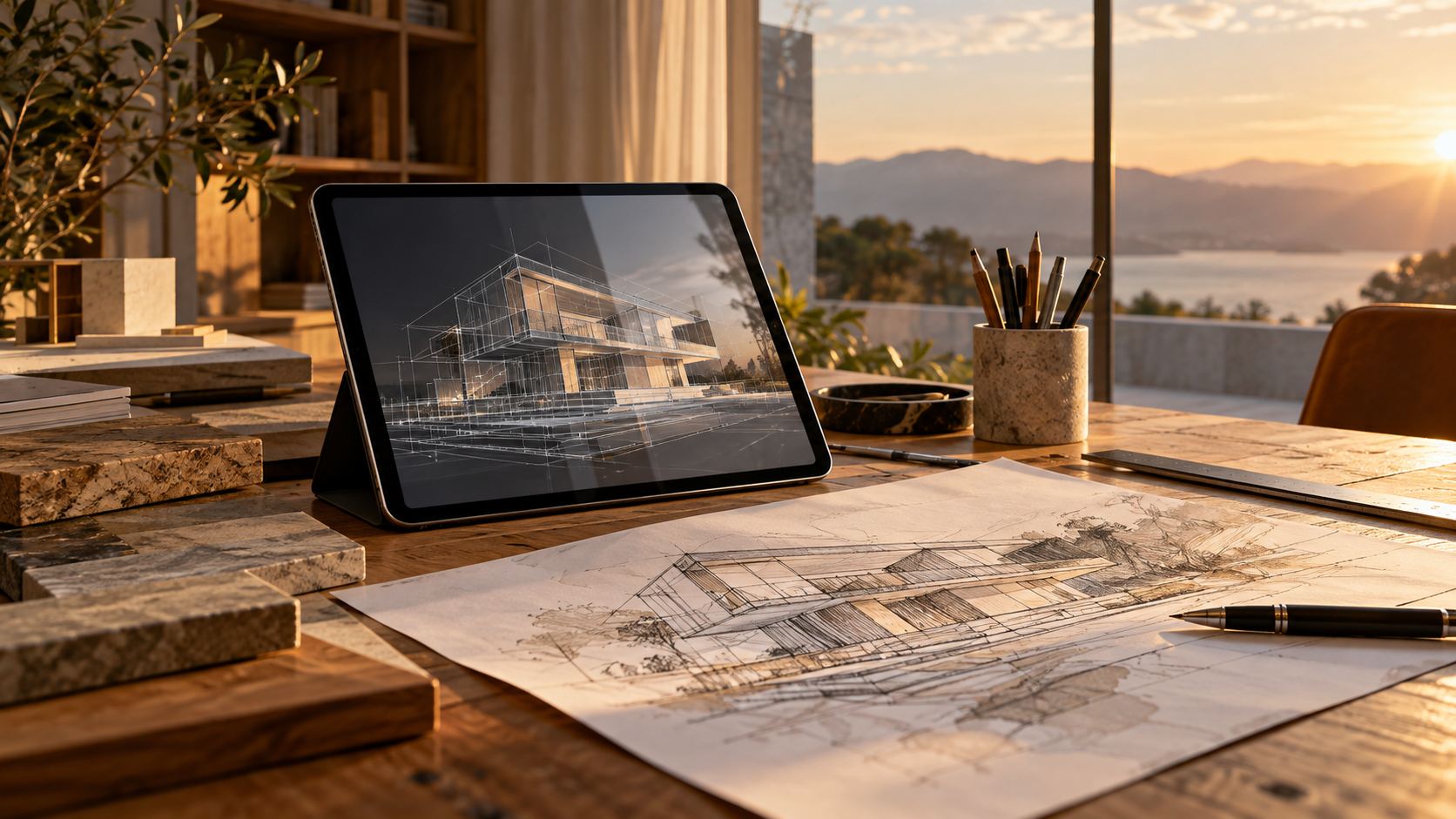
- We plan and sketch first. We think, draw and discuss before we generate. AI follows the idea. It does not replace it.
- We check the output. Generated images and text can look convincing and still be wrong. We test them against the brief, the site and the codes.
- We protect confidentiality. Client information is not put into tools that could keep or share it without permission, and we follow the terms of each tool we use.
- We respect authorship. We take care with the source of images and data, and we aim to use tools and material we are entitled to use.
- We keep learning. The tools change quickly. We try them, measure what they do and keep what helps.
Why this matters
The danger is not that AI will design buildings badly. It is that we will stop designing. When the first answer is free, it is tempting to accept it. The discipline of planning, testing and refining, and of asking why, is what produces buildings that are right for their use and their place, and it is the skill that matters most. Faster tools give us more time for it.
Drawing on papyrus, at the drawing board, on a screen and now with AI, the work is the same: understanding people and place, and making something that serves them. We will use every tool that helps us do that well, and we will never forget that the designing is ours.
See also: AI in design and Technology and research.
Cite this article
Author: byJOOM. Choose a style and copy the citation.
- APA
byJOOM. (2026, October 15). Drawing, then AI: a tool, not the designer. byJOOM. https://byjoom.com/journal/design-with-ai/
- Harvard
byJOOM (2026) Drawing, then AI: a tool, not the designer. Available at: https://byjoom.com/journal/design-with-ai/ (Accessed: [date]).
- MLA
byJOOM. “Drawing, then AI: a tool, not the designer.” byJOOM, 15 Oct. 2026, byjoom.com/journal/design-with-ai/. Accessed [date].
- Chicago
byJOOM. “Drawing, then AI: a tool, not the designer.” byJOOM, October 15, 2026. https://byjoom.com/journal/design-with-ai/.