

All articles · · By byJOOM
Designing for children
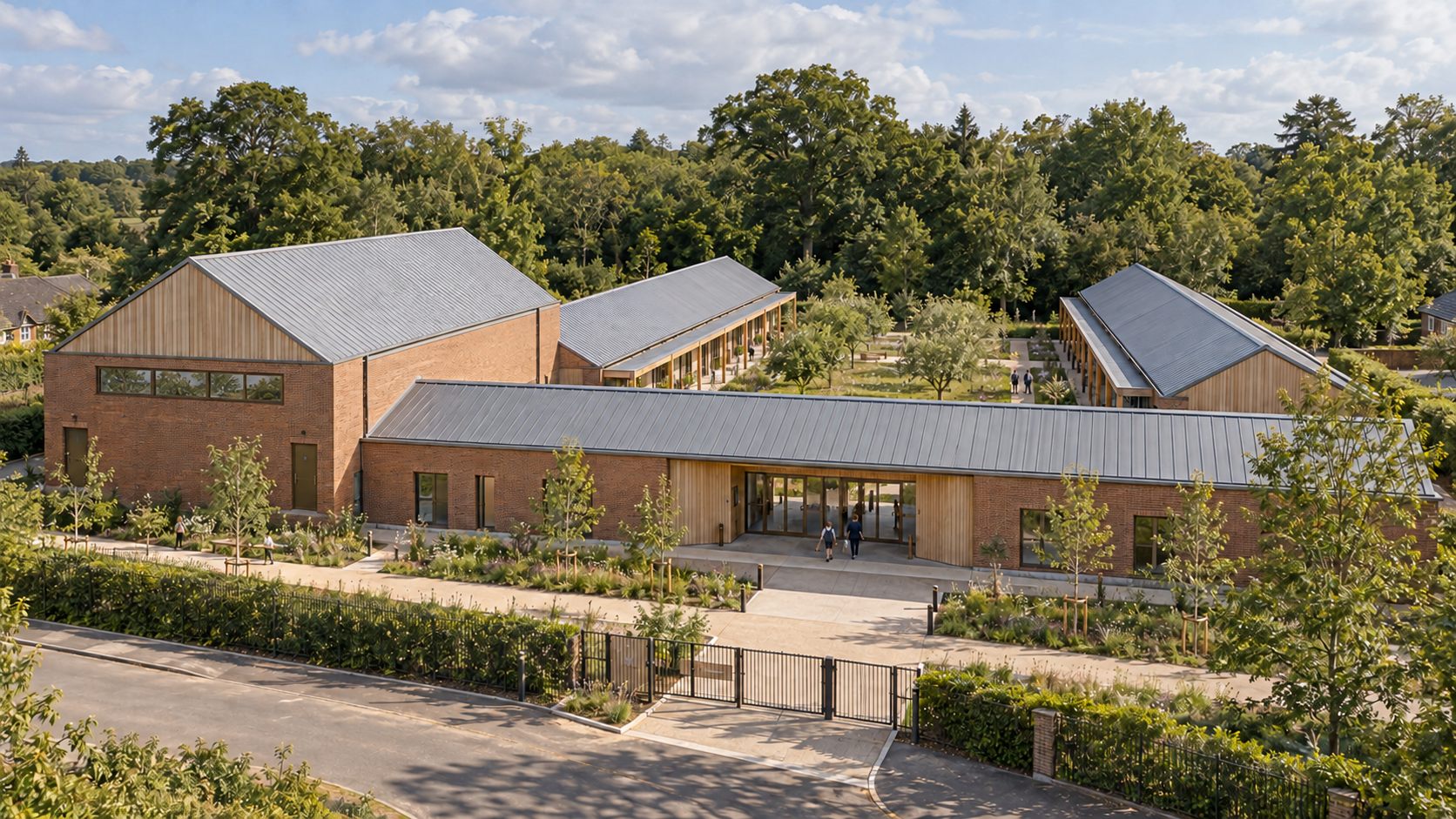
Children use buildings differently from adults. They are smaller, they move differently, they see the world at a lower height and they learn through play. When we design for them, in schools, nurseries, homes, hospitals or public places, we start from how a child experiences a place. At byJOOM we draw on projects such as our concept for The Orchard School. This article is our opinion and general guidance, written in October 2026. Child safety and safeguarding rules are strict and vary by country, so always take specialist advice and follow current regulations.
See the world from their height
A child sees windows, door handles and basins from a different angle. We check sill heights, so children can look out, handles and switches that children can reach, and furniture and fittings that suit their size. A low window seat or a reading nook sized for a child makes a space feel made for them.
Scale and simplicity
Large, complicated buildings can feel overwhelming. We keep children's spaces human in scale, with clear, simple layouts so that a child can understand where they are. Small groups and rooms of different sizes help children feel secure. See Schools that children want to be in.
A child sees windows, door handles and basins from a different angle.
Safe, but not boring
Safety comes first. That includes secure entrances, clear sight-lines so adults can see children, safe materials and details, and no hazards such as sharp edges, trapping gaps and falls. But a safe place does not have to be dull. Children need to explore, climb, hide, build and take small, managed risks. The best designs make that possible within a safe framework.
Play everywhere
Play is how children learn. We try to include opportunities for it indoors and out: places to run, to be quiet, to build, to make noise, to make a mess. Gardens, sand and water, trees, mud and loose parts all invite play. See also Courtyards.
Light, colour, sound
Children respond to light and colour, but too much stimulation can be tiring. We aim for daylight, calm, natural colours and materials, with colour used with care. Good acoustics matter greatly in classrooms and nurseries, since children find it harder than adults to follow speech in a noisy room.
Touch and materials
Children touch everything. We choose real, warm, durable materials, such as timber, brick and stone, that feel good and can take heavy use. Surfaces that are easy to clean are important in places where young children are.
Independence
Children grow in confidence when they can do things for themselves: reach a basin, hang up a coat, open a door, find their own way. We design for that independence while keeping children safe.
Different ages and needs
A nursery, a primary school, a teenagers' space and a children's hospital are different. Babies need calm, safe floors, and teenagers need independence and a place to be with friends. Children with disabilities or additional needs must be included from the start. See Designing for people with disabilities and Designing for neurodiversity.
Listen to children
Where it is appropriate and with proper safeguards, ask children about the places they use. Their answers are often surprising, honest and useful. See How to run a user workshop.
In short
Design at a child's scale, keep children safe without making places dull, make room for play, think about light, sound and touch, and support independence.
Cite this article
Author: byJOOM. Choose a style and copy the citation.
- APA
byJOOM. (2026, October 15). Designing for children. byJOOM. https://byjoom.com/journal/designing-for-children/
- Harvard
byJOOM (2026) Designing for children. Available at: https://byjoom.com/journal/designing-for-children/ (Accessed: [date]).
- MLA
byJOOM. “Designing for children.” byJOOM, 15 Oct. 2026, byjoom.com/journal/designing-for-children/. Accessed [date].
- Chicago
byJOOM. “Designing for children.” byJOOM, October 15, 2026. https://byjoom.com/journal/designing-for-children/.