

All articles · · By byJOOM
Light: why a window is a decision
Light is the first material of architecture. Before stone, timber or glass, a building is a way of letting light in, keeping it out and shaping it. A good room is one where the light falls well. Here is how we think about it, with examples from our concepts such as The Living Archive, Al Salam Mosque and The Wellbeing Clinic.
A window is a decision
Every window answers several questions at once. What will you see? How much light will it let in? Will it also let in heat, glare, noise or the gaze of neighbours? A window is not a hole in a wall. It is a framed view, a source of light, a path for air and a cost in energy. We decide each one on purpose.
Daylight first
Natural daylight is more pleasant, changes through the day, and reduces the need for electric light. We bring it in from more than one side where we can, use high windows and rooflights to reach deep rooms, and use pale surfaces to carry it further. At The Wellbeing Clinic, a tall atrium lights the reception, the stairs and the waiting areas. At The Living Archive, a tall, multi-level atrium and large glazed façades fill the building with light.
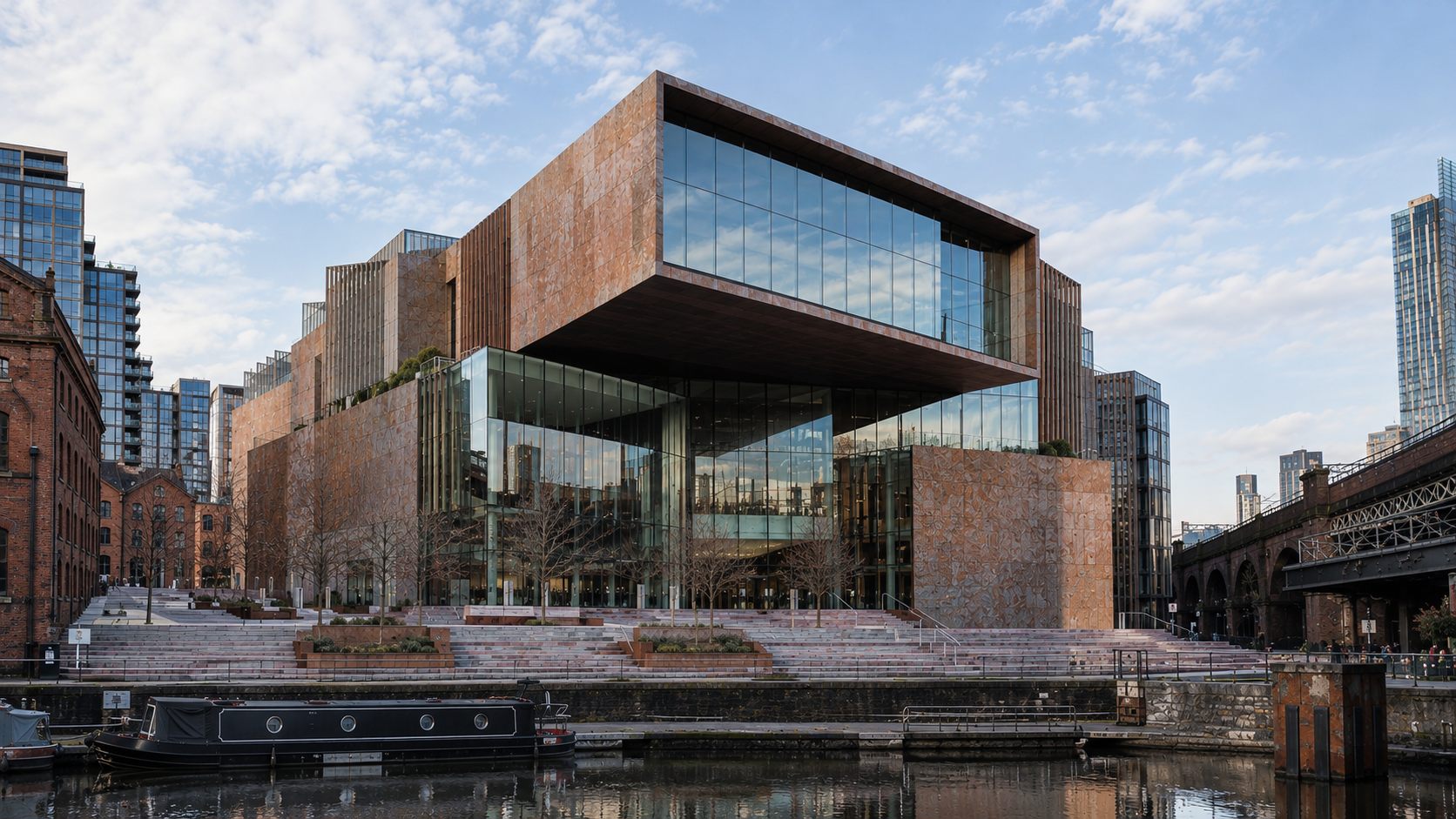
Will it also let in heat, glare, noise or the gaze of neighbours?
Control the sun
Too much sun brings glare and heat. We shade it with the architecture itself: deep overhangs, fins, louvres, trees and screens. The sun is then admitted when it is welcome and kept out when it is not. See also Designing for the desert and Building on the sea.
Filtered light
Sometimes the most beautiful light is indirect. A perforated screen throws patterns across a floor. A carved stone wall, as at Al Salam Mosque, turns strong sun into soft, moving shadows in the prayer hall. A timber screen breaks up glare. Filtered light gives a place calm and character.
Light at night
After dark, a building is lit from inside. Warm, well-placed lighting makes a lobby feel welcoming and a street feel safe, and lets a building glow without waste. We plan lighting together with the architecture, aiming for low glare, low energy and little spill into the sky.
Light and wellbeing
Many people find daylight and a view lifts their mood. That is why we try to give rooms in homes, schools, workplaces and hospitals a window and a view. See also Healthy buildings.
How we test it
We study the sun's path and daylight in models, drawings and computer analysis, and compare options before we choose. Physical models in real light still teach us a great deal.
In short
- Think of a window as a decision.
- Bring in daylight from more than one side.
- Shade the sun with the building itself.
- Use filtered light to give calm and character.
- Light the building at night with care.
Our projects are concept designs, and the images on our site are visualisations (see our Disclaimers).
Cite this article
Author: byJOOM. Choose a style and copy the citation.
- APA
byJOOM. (2026, October 15). Light: why a window is a decision. byJOOM. https://byjoom.com/journal/light/
- Harvard
byJOOM (2026) Light: why a window is a decision. Available at: https://byjoom.com/journal/light/ (Accessed: [date]).
- MLA
byJOOM. “Light: why a window is a decision.” byJOOM, 15 Oct. 2026, byjoom.com/journal/light/. Accessed [date].
- Chicago
byJOOM. “Light: why a window is a decision.” byJOOM, October 15, 2026. https://byjoom.com/journal/light/.