

All articles · · By byJOOM
Designing for wellbeing at work
We spend a large part of our lives at work, so the places where we work affect how we feel, how well we think and whether we want to be there. A workplace that supports wellbeing is not about perks; it is about daylight, air, quiet, choice, movement and a sense of belonging. At byJOOM we design workplaces from how people actually work. This article is general guidance and our opinion, written in October 2026. It is not health advice, and standards for workplaces differ by country, so check current rules and involve occupational health and workplace specialists. See also Offices for how people work now.
Light and views
Daylight and a view of trees, sky or a street are widely thought to help people feel better and stay alert. We place desks near windows where we can, bring light deep into the plan with atria and glazed partitions, and control glare. See also Light.
Air and temperature
Fresh air and comfortable temperature help concentration. We plan good ventilation, with natural ventilation where the climate allows, and let people adjust their own conditions. Large temperature swings and stuffy rooms are common complaints. See Airtightness and ventilation.
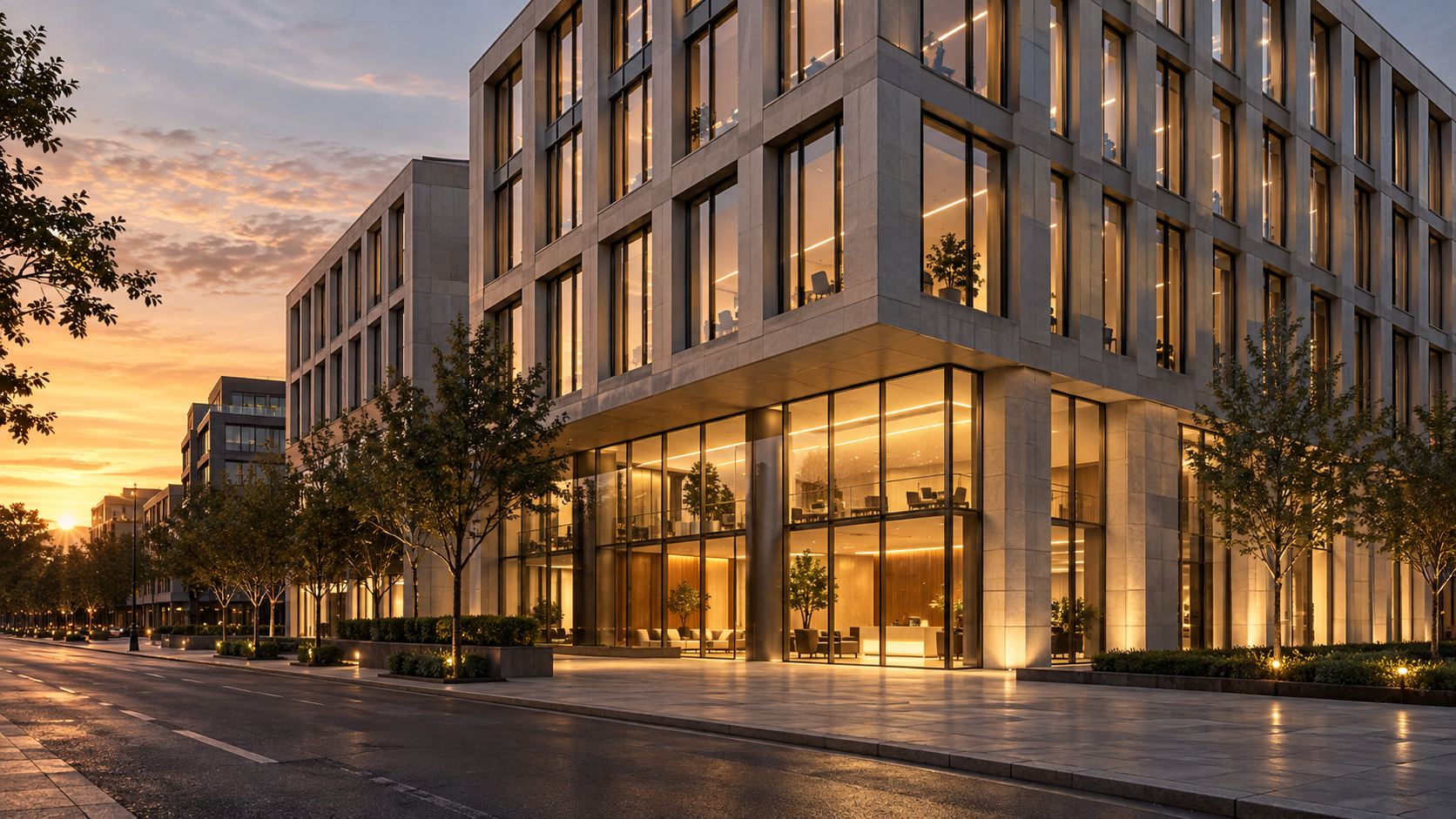
Daylight and a view of trees, sky or a street are widely thought to help people feel better and stay alert.
Sound
Noise is one of the main sources of workplace stress. Good acoustics, with soft surfaces, absorbent ceilings, separate noisy and quiet zones and well-placed meeting rooms, make a big difference. Offer quiet rooms and phone booths. See Designing for neurodiversity.
A choice of settings
Different tasks need different places. A good workplace offers:
- Focus areas that are quiet and private.
- Collaboration spaces for conversation and workshops.
- Social spaces, such as a kitchen, a café or a garden, where people meet.
- Rest and reflection spaces, such as a quiet room or a prayer room.
- Flexible desks and meeting rooms that suit changing teams.
Choice gives people control, which is important to wellbeing.
Movement and nature
Sitting still all day is tiring. Stairs that are easy and pleasant to use, walking routes, outdoor terraces, bicycle storage and showers encourage movement. Plants, gardens and natural materials bring nature into the workplace. See Biodiversity on a roof.
Belonging and fairness
A workplace should be welcoming to everyone, including people with disabilities, parents, people of different faiths and people who work at different times. Accessible toilets, lactation and prayer spaces, and a fair choice of seating are part of the design. See Designing for people with disabilities.
Food and gathering
Where people eat and talk matters. A kitchen or café with daylight and space to sit together is often the heart of a workplace.
Hybrid working
Many organisations now mix home and office working. The office becomes a place for meeting, learning and belonging, and the design should support that, with good spaces for teams and for video calls.
Ask the people who work there
The best way to find what supports wellbeing is to ask, test and adjust. See How to run a user workshop.
In short
Light, air, quiet, choice, movement, nature and belonging. Design from how people work, ask them, and keep adjusting.
Cite this article
Author: byJOOM. Choose a style and copy the citation.
- APA
byJOOM. (2026, October 15). Designing for wellbeing at work. byJOOM. https://byjoom.com/journal/designing-for-wellbeing-at-work/
- Harvard
byJOOM (2026) Designing for wellbeing at work. Available at: https://byjoom.com/journal/designing-for-wellbeing-at-work/ (Accessed: [date]).
- MLA
byJOOM. “Designing for wellbeing at work.” byJOOM, 15 Oct. 2026, byjoom.com/journal/designing-for-wellbeing-at-work/. Accessed [date].
- Chicago
byJOOM. “Designing for wellbeing at work.” byJOOM, October 15, 2026. https://byjoom.com/journal/designing-for-wellbeing-at-work/.