

All articles · · By byJOOM
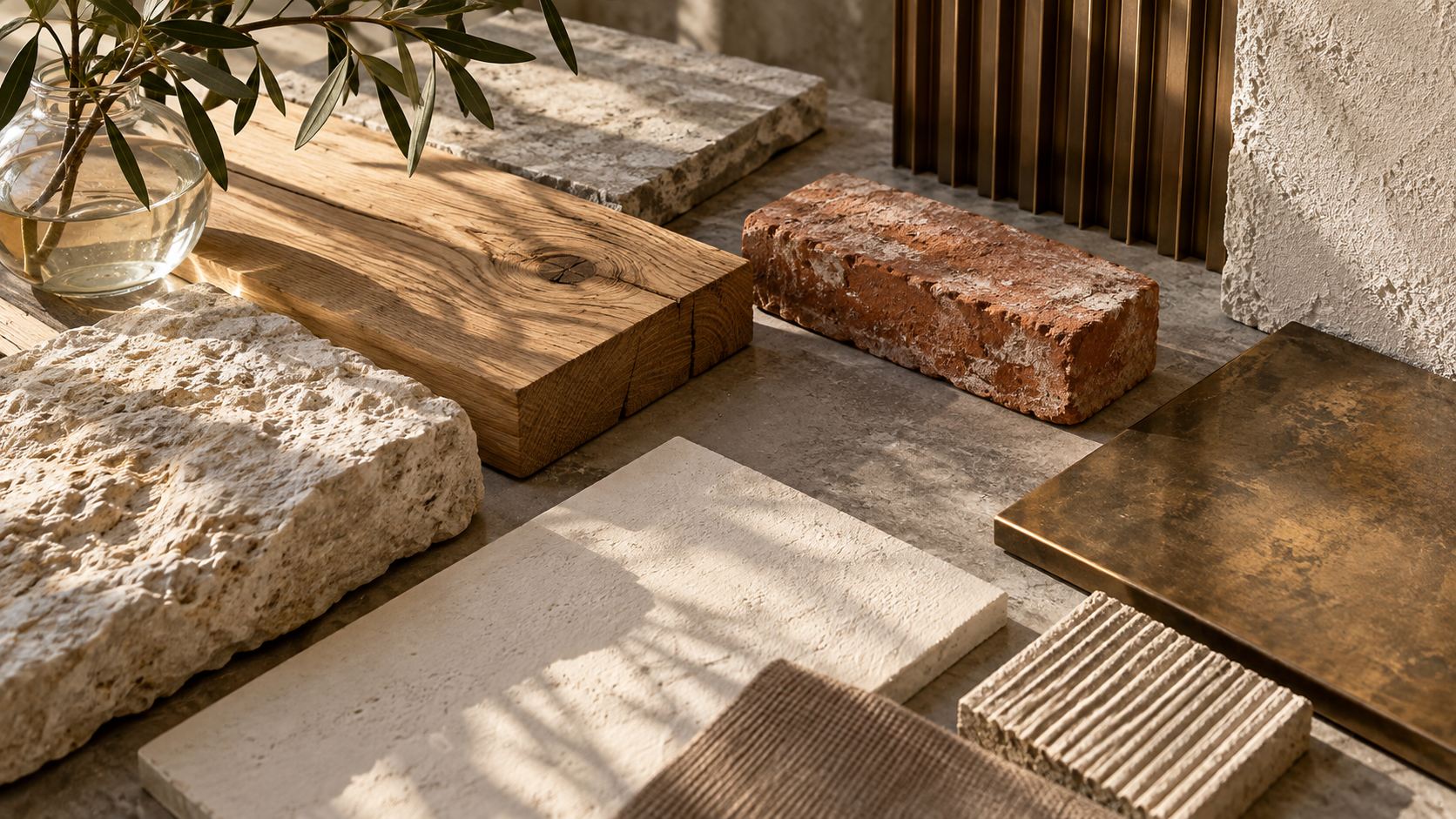
Brick, stone, render or timber cladding: choosing an external finish
The outside of a building is its face and its coat. It must look right, keep the weather out and last. Brick, stone, render and timber are four of the most common finishes, and each has its own character and needs. At byJOOM we choose them for the place and the use. See also Choosing materials. This guide compares them. It is general information, written in October 2026. Fire and building rules for external walls are strict and differ between countries, so check current requirements and take professional advice.
Brick
- Good for: durability, familiar character, low maintenance, weathering gracefully.
- Watch for: the cost of skilled labour, the carbon in firing, frost resistance (choose a brick suited to the exposure), movement joints, and mortar quality.
- Often used with: cavity walls and timber frames. See Cavity walls explained.
Stone
- Good for: longevity, beauty and local character, and its thermal mass.
- Watch for: cost, weight, supply, how it is fixed (solid or as a cladding), and how it is cleaned and repaired. Local stone is often best. See Local stone, local craft.
- Fixing: thin stone cladding is hung from a frame, and the frame and fixings need careful design.
Zinc, copper and other metals, fibre-cement, terracotta, glass and green walls each have their uses and rules.
Render
- Good for: smooth modern surfaces, lightness, colour choice and relative low cost.
- Watch for: cracking, staining, algae growth and the need for repainting or recoating. Render needs good detailing at the top and base, with drips and movement joints, and the right substrate. In some systems, the insulation and finish must be certified together.
- Types: traditional sand-and-cement or lime renders, and thin-coat render on insulation.
Timber cladding
- Good for: warmth, lightness, a natural look and renewable material.
- Watch for: moisture, fire rules, weathering and colour change (many timbers turn silver-grey), fixing, and maintenance. Choose species and treatments suited to the exposure, and detail for drainage and ventilation behind. See Rain, brick and timber.
Others to consider
Zinc, copper and other metals, fibre-cement, terracotta, glass and green walls each have their uses and rules.
Fire and external walls
After serious fires in buildings with combustible cladding, rules for external walls have become stricter in many countries, especially for taller buildings and those used for sleeping. The materials, and the entire wall build-up, including insulation and cavity barriers, may be restricted. Always check the current regulations and take advice from a fire engineer or building control.
How to choose
- Check the rules for fire, planning and conservation.
- Match the place: climate, exposure, neighbours, local tradition.
- Think about life: how it ages, who maintains it, how it can be repaired.
- Compare carbon and cost over the life, not just at the start. See Embodied carbon in plain language.
- Look at samples and mock-ups in real light.
In short
No finish is best everywhere. Choose for the place, the rules, the maintenance you can give, and how you want the building to look as it ages.
Cite this article
Author: byJOOM. Choose a style and copy the citation.
- APA
byJOOM. (2026, October 15). Brick, stone, render or timber cladding: choosing an external finish. byJOOM. https://byjoom.com/journal/choosing-an-external-finish/
- Harvard
byJOOM (2026) Brick, stone, render or timber cladding: choosing an external finish. Available at: https://byjoom.com/journal/choosing-an-external-finish/ (Accessed: [date]).
- MLA
byJOOM. “Brick, stone, render or timber cladding: choosing an external finish.” byJOOM, 15 Oct. 2026, byjoom.com/journal/choosing-an-external-finish/. Accessed [date].
- Chicago
byJOOM. “Brick, stone, render or timber cladding: choosing an external finish.” byJOOM, October 15, 2026. https://byjoom.com/journal/choosing-an-external-finish/.